


From Rice to Regeneration
Astungkara Way began in 2020 by bringing international participants and Balinese rice farmers together through shared experiences in the field. From the start, we knew farmers could not and should not carry the transition alone.
Since then, we have become experts in regenerative rice farming, building deep field knowledge alongside farmers and leading research partners.
And over time, that work has grown into something broader: an inclusive and holistic movement.


Regeneration needs systemic change.
Our model connects:
Farmers
who lead the transition in the field
Hospitality
catalyzes the transition through services, procurement, and guest engagement
Youth and schools
to reconnect the next generation with farming and food systems
Our Trails and Farm Experiences
bring travelers, students, and teams into direct relationship with the land
Research and data
to measure outcomes and improve the model over time
Why THis matters
Rice landscapes across Indonesia are under pressure from declining soil fertility, chemical dependence, biodiversity loss, and water contamination.
Through our work with farmers and research partners, we have already seen strong field results:
-
350+ farmers engaged by the end of 2025
-
Yields up 22% in difficult weather years
-
Average household profits up 67% within 1 year
-
Soil organic carbon doubled from 2% to 4% within 2 years
-
Biodiversity index improved from 1.03 to 1.45
-
Heavy metals in irrigation water fell from 10-15x above safe levels to safe thresholds.
This needs to become the norm.
How Regenerative Rice Farming Works
Regenerative rice isn’t theory. At Astungkara Way, we partner with global leading research teams and apply Complex Rice Systems (CRS), developed over the last 15 years by Dr. Uma Khumairoh together with her teams from Wageningen University (Netherlands) and Brawijaya University (Indonesia).
Building on proven farm-level trials in East Java, we’re bringing regenerative rice to the landscape level in Bali – and beyond.
The transition away from chemicals takes one to two years, a calendar we set with the farmers. Step by step, they introduce plants and animals that work with the rice – such as ducks, border plants, and azolla fern – to reduce chemical inputs until none are needed. As ecological balance returns, soils revive, water clears, biodiversity thrives, and yields remain strong.

Border plants & flowers
Habitat for beneficial insects and pollinators, reducing reliance on pesticides. Also provide significant additional revenue for farmers.

Azolla ferns
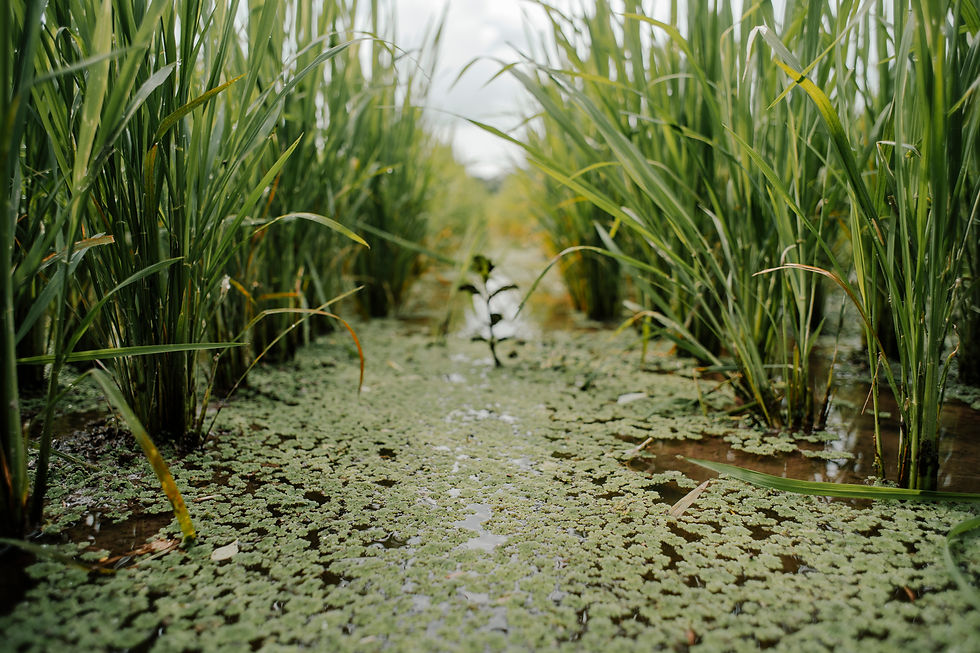
Floating nitrogen-fixing plants that enrich soils, limit weeds and provide duck feed.

Ducks in the paddies
Natural pest control, weed management, and fertilization. Also provide farmers with additional revenue (meat, eggs).

Compost & biofertilizers
Turning rice straw residue and border plants into compost, closing nutrient cycles and bringing soil life back.

Water stewardship
Natural water filtration to keep rice healthy, resilient and nutritious for consumers while promoting healthy soil biology.
Our mission
7.000 ha
10% of Bali's rice paddies transition to regenerative
by 2030
Since January 2023, Astungkara Way has united farmers, researchers, and youth to grow a Regenerative Rice Farming movement from the heart of Bali.
We provide farmers with free training, micro-financing and market access, to fully de-risk the transition for them.
We are starting by running trials across Bali and collecting extensive data to prove that it is the most viable method, not just for farmers but for consumers and ecosystems.


This movement was initiated through an international collaboration:


Restaurants and hotels
Establishments of all sizes in Bali serve our Regenerative Rice to their customers, who are informed of the importance of supporting this unique movement.
A few of our customers supporting local, Regenerative Rice


