


Regenerative Farming Academy
Astungkara Way facilitates a Regenerative Farming Academy in Bali, training farmers for free to transition away from chemical-intensive farming and toward regenerative systems that restore soil, biodiversity, water quality, and livelihoods.
This work is made possible through a mix of hospitality partnerships, mission-aligned funding, and individual sponsors who choose to directly support ecosystem restoration through farmer transition.
What is the Academy?
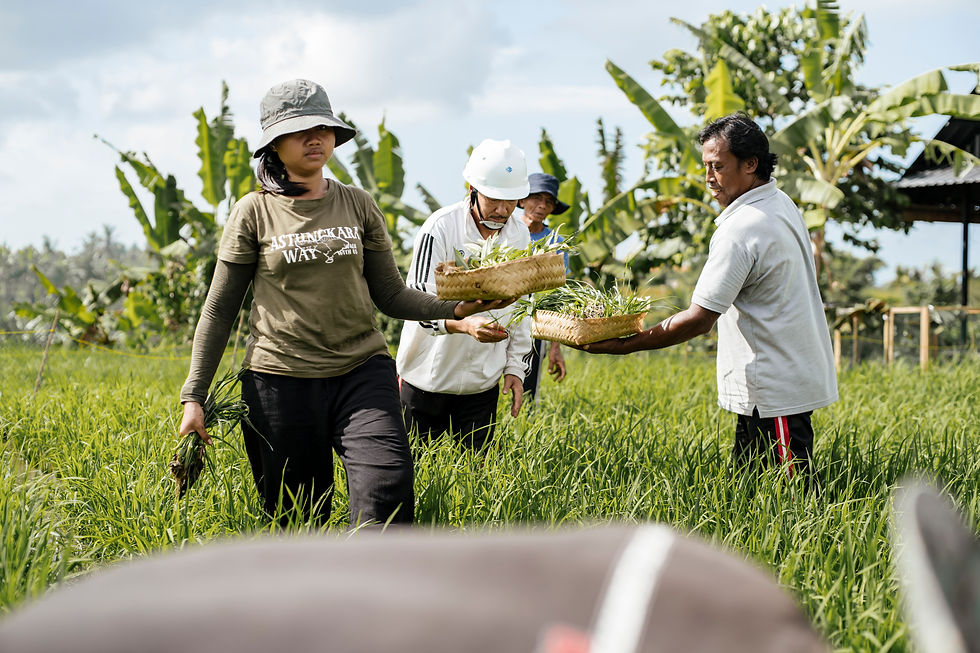
The Regenerative Farming Academy is the farmer transition arm of Astungkara Way.
It is the structure through which we carry out outreach, farmer engagement, training, demonstration plots, field support, incentives, Champion development, and impact tracking over time.
Since 2022, Astungkara Way has worked directly with over 250 farmers in Bali to test, refine, and scale regenerative rice farming pathways based on real field evidence and supported by leading research partners.
Meaningful transition takes time. Our farmer programs run over 24 months and combine technical support with field learning, peer-to-peer transfer, and rigorous measurement.
The bigger goal is to help build a model for the large-scale transition rice farming will need in the years ahead to remain viable, resilient, and attractive for future generations.
Why sponsorship matters
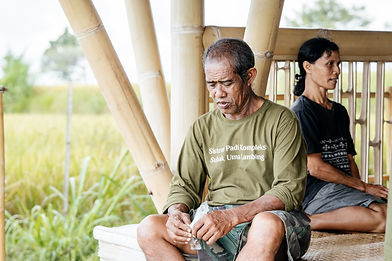
Farmers should not carry the transition alone.
Moving away from chemical-intensive farming requires outreach, trust-building, training, field support, demonstration plots, incentives, and impact tracking over time. That is what the Academy provides.
For USD 20 per month over 24 months, you can support the full transition of one farmer from conventional to regenerative farming. This includes outreach, training and support, initial incentives such as compost and border plants, planting and weeding tools, and pre/post impact data collection on soil and biodiversity.
USD 20/month × 24 months = USD 480
supports 1 farmer’s full transition
How it works
We train farmers in cohorts of 12. It takes USD 960 to fund the first 4 months of outreach, training, and field support for a new cohort.
Monthly sponsorships are pooled to help launch new cohorts and support farmers through the longer 24-month transition.

What one farmer transition helps regenerate
One farmer’s transition helps restore more than a field. It means healthier ecosystems, more nutritious food and stronger livelihoods.

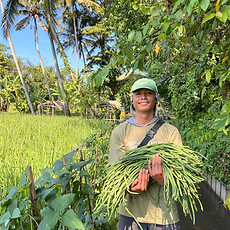
Our method is based on polyculture, not monoculture. Farmers do not only produce rice. They also produce other foods that improve household nutrition and local food systems.
-
More nutritious food: ecologically complex Rice Systems produce more diverse and more nutritious food than simpler rice systems.
-
Because the method is based on polyculture, farmers produce not only rice but also other foods for their families and local markets.


Who supports the Academy
The Academy is supported through a mix of aligned partners, earned revenue, and individual support, resulting in training over 250 farmers since 2024.
Hospitality and
corporates
They support through ESG budgets, community programs, and sustainability commitments
Astungkara Trails and Farm Experiences
Our Trails and Farm Experiences channel resources to the Academy while building public awareness
Grants and impact funding
Mission-aligned grants and impact funding have helped us build the Academy’s foundations, from farmer training to outreach and data systems
Individual sponsors
An essential part of this mix, they support farmer transition directly, especially in places where local hospitality or corporate support is not yet in place.
Help one farmer transition
For USD 20 per month over 24 months, you can help one farmer fully transition from conventional to regenerative farming.
That means less chemical dependence, healthier soils, cleaner water, stronger biodiversity, and better livelihoods.
It is a practical way to support ecosystem restoration where it begins: with the people working the land.